other

Salt: A Cook’s Best Friend

Salt is the universal seasoning—it makes flavors pop and go “Wow!” Salt brings out other tastes, even sweetness! All creatures like to eat salt—except, as we know in the Northwest, NOT slugs!

Salt is either mined from ancient, now dry, salt lake deposits or evaporated from sea water. There are many varieties. Refined table salt has additives to keep it flowing freely and iodine to ensure thyroid gland health in inland areas. Kosher salt is additive-free; and chefs appreciate its coarse-grained texture. Pickling salt contains no additives, which could cloud the pickle brine. Less refined, rock salt retains more minerals; it’s used in making ice-cream, baking potatoes, and nesting baked oysters in pans.

Hand-collected from coastal France, sel gris, also called grey or Celtic salt, is moist and unrefined; its pale color comes from the salt flats clay. During evaporation, a light film forms on top; this is fleur de sel, considered the “champagne” of salts.

‘Alaea is the traditional Hawaiian table salt; this sea salt gets its natural color from volcanic red clay. Danish smoked salt is flavored by the woods used when the evaporation is done over an open fire.

Looking for big flavor—but from natural products—today’s consumers want gourmet salts from both culinary and health standpoints. And SaltWorks™, Inc., based in the Seattle area, does all–natural very well. The company buys directly from the farmers who produce the salt and imports it without a middleman. Founded in 2002 by owner Mark Zoske, SaltWorks now sells over 10 million pounds of sea salt a year. The company’s Artisan Salt Co. retail brand offers more than 30 varieties of salt and is available in hundreds of high–end retailers across the country.Salt can headline a menu item, such as in Chinese Salt & Pepper Squid or Whole Snapper Baked in a Salt Crust. We love to sprinkle a little salt in salads before tossing; it’s a natural with hard-boiled eggs; and, heaven knows, we all love our salty snacks. We even enjoy it with our drinks—from a simple Salty Dog to the very popular Margarita.

Brining has become very trendy for flavoring food and keeping meats moist. My recipe for Pacific Rim Style Brine for Salmon for the Grill is an easy way to try out brining—once the sun comes out—perhaps for your first cookout of the season. 

Pacific Rim Style Brine for Salmon for the Grill

Makes about 1 quart of brine

3 tablespoons kosher salt
1/2 cup, packed, light brown sugar
4 cups water
1/2 cup soy sauce
2 tablespoons finely minced fresh garlic
2 tablespoons finely minced fresh ginger

To prepare the brine: Add salt and brown sugar to water and mix until dissolved. Stir in remaining ingredients. Refrigerate unused brine for up to 10 days.

To brine and cook fish: Place salmon in brine, enough to totally cover fish. If needed to keep it submerged, weight down salmon by placing a plate or plastic bag filled with water on top of fish. Marinate fish in brine, refrigerated, for 3 to 4 hours only; DO NOT OVER-BRINE FISH! Remove fish from brine and lightly rinse off with cold water. Throw away used brine immediately!

Refrigerate fish, covered, till ready to cook. Grill the fish in your usual way, but do not salt the fish. Taste after cooking to see if salt is needed—it probably won’t be.

Chef’s Note: This brine is also great for brining chicken breasts, scallops or pork chops.

Copyright ©2009 by Kathy Casey Food Studios®

Posted by Kathy on April 22nd, 2009  |  Comments Off on Salt: A Cook’s Best Friend |  Posted in Dishing with Kathy Casey Blog, KOMO Radio, other, Recent Posts, Recipes

Spring Brunch Ideas and What to do with those Easter Eggs?

Easter is such a festive holiday – it is religious to some and a welcoming of spring to others. In the days past it was a time for new pastel dresses and flowery hats and shiny patent shoes.

The egg hunt is still my favorite! But what to do with all those found eggs?? Egg Salad Sandwiches, Deviled Eggs (my favorite recipe is below!), Cobb Salad, Potato or Pasta Salad.

Follow the egg hunt with a delicious brunch on this special Sunday enjoyed with your favorite friends and family.

For your brunch be sure to pick a menu that includes items you can make in advance so that you can enjoy the day. Buffet is the way to go! Set out a beautiful fruit salad drizzled with fresh lime juice mixed with a little honey and spike with some chopped mint. Accompany with Denver Breakfast Bake for a Crowd (a baked savory bread pudding like dish that you can prep the day beore and bake the morning of your party) and some grilled, fresh, first of the season asparagus. Quick, easy and delicious! Then move on to an afternoon of lounging conversation – what a way to welcome the coming of spring.

And for those celebrating the Jewish holiday of Passover this week my friend Jamie Peha has these suggestions for brunch: Matzo Brei (said Bry) A traditional dish for Passover brunch, this easy egg and matzo fry can be made sweet, topped with cinnamon sugar or jelly, or savory, with additions of your favorite vegetables and fresh herbs or or Farfel (Matzoh and egg dumplings – deep fried and served with Syrup or cinammon/sugar). Check out Martha Stewart for some great passover brunch ideas on her site.

Denver” Breakfast Bake for a Crowd
serves 6 – 8

2 Tbsp. butter or olive oil
3/4 cup diced onion
1 1/2 cups chopped, mixed red and green bell peppers
1 Tbsp. minced fresh garlic
8 eggs
3 cups half & half
1 tsp. salt
1/4 tsp. black pepper
8 cups 1-inch-diced hearty French bread
1 1/2 cups chopped ham
2 cups (8 ounces) coarsely grated cheddar cheese
1/2 cup grated Parmesan cheese

In a large sauté pan heat the butter or olive oil over medium-high heat. Add the onions and peppers and sauté until three-quarters cooked, about 4 minutes. Add the garlic and cook for 30 seconds more. Remove from heat and set aside.

In a large bowl whisk together the eggs, half & half, salt and pepper until well combined. Add the bread, ham, cooled vegetable mixture, cheddar cheese and half of the Parmesan cheese. Place in an 11 x 13-inch baking pan. Sprinkle the remaining Parmesan over the top, and let sit, refrigerated, at least 1 hour or preferably overnight, so that bread soaks up egg mixture.

When ready to serve, bake in a preheated 350-degree oven for approximately 45 – 50 minutes or until puffy and golden and a knife inserted in the center comes out clean.
© 2009 Kathy Casey Food Studios

Chipotle Deviled Eggs
Makes 24 stuffed eggs


1 dozen large eggs

3 tablespoons regular or low-fat sour cream

3 tablespoons mayonnaise

1/2 teaspoon salt

1/2 teaspoon Dijon mustard, optional

1 to 2 tablespoons chipotle chile purée*

1 teaspoon minced garlic

2 tablespoons very thinly sliced green onion


Topping

1/2 cup diced (1/4-inch) tomatoes

1 tablespoon minced white onion

2 tablespoons minced fresh cilantro

1 to 2 teaspoons chipotle chile purée*


Place eggs in a saucepan and cover with cool water to 1 inch above eggs. Bring to a boil over medium-high heat, then 10 minutes. After eggs have cooked for 10 minutes, remove from the heat and run cool water over them. When eggs are cool, carefully peel under running water.


Cut the eggs in half lengthwise and remove the yolks to a mixing bowl. Set the egg white halves on a platter, cover, and refrigerate.


Mash the yolks to a smooth consistency with a fork or potato masher. Mix in the sour cream, mayonnaise, salt, mustard, 1 to 2 tablespoons chipotle purée, and garlic until smooth. Stir in the green onions. Spoon the yolk mixture into a pastry bag fitted with a plain or large star tip and then squeeze (pipe) the mixture evenly into the egg white halves.


To make the topping: In a small bowl, mix together tomatoes, onion, cilantro, and chipotle purée. Top each egg half with 1 teaspoon of the tomato mixture.


*To make chipotle purée: Place 1 can of chipotle peppers in adobo sauce in blender and purée until smooth. Freeze any remaining purée for another use.


Recipe from Dishing with Kathy Casey: Food, Fun & Cocktails from Seattle’s Culinary Diva, Sasquatch Books, Seattle. Copyright © 2002 by Kathy Casey.


Posted by Kathy on April 9th, 2009  |  Comments Off on Spring Brunch Ideas and What to do with those Easter Eggs? |  Posted in appetizers, breakfast, Dishing with Kathy Casey Blog, KOMO Radio, other, Recent Posts, Recipes, salads

Dishing up…”The Basics”

Not everyone knows how to cook—but most would like to! I’ll sometimes whip up a little vinaigrette at friends’ houses when invited for dinner, and it seems that, more often than not, they say, “Wow! How did you make that? what went in there? the ingredients are in my kitchen??”

So for this weeks blog, I thought I would write about three great things for beginning cooks to learn how to make. And it happens that a nice simple meal can be built around these: a vinaigrette, a marinade and a pound cake.

We’ll start with the vinaigrette. Contrary to the “standard” measurements for it—which in my opinion are too oily for today’s palate, I prefer to do 1 part vinegar to 2 1/2 to 3 parts oil. The vinegar and oil can be any kind. Other essentials to me are a small dollop of Dijon mustard, a big pinch of kosher salt, and some pepper. Those are the fundamentals, and from there you can get creative. Add a pinch of sugar or a drizzle of honey if you like it sweet. Add some garlic, lemon zest and a squeeze of citrus if you wish. Try adding grainy mustard or some chopped fresh herbs or a pinch of ground spice, such as cumin or coriander; or some chipotle chili powder and lime juice if you’re wanting a Latin influence. If Greek is your gig for the evening, toss in feta cheese, fresh oregano, chopped olives and lemon juice. Italian? Fresh basil, a dash of grated Parmesan, and extra-virgin olive oil for the oil. You get the picture. It’s just the basics and then you twist them to your taste! I have prepared a handy chart that you can use as your vinaigrette guide to get you started.

Next, there’s marinade. This is an herb marinade to use when you are grilling. And, yes, it is very similar to a vinaigrette! But, again, you can vary the flavorings. When marinating, let’s say, a beef steak or a lamb chop, I prefer to make a fairly thick marinade and leave it on for at least thirty minutes before cooking.If you are marinating overnight—which is great if you are planning that far in advance, you must do it in the refrigerator. For meat items, such as beef, pork or lamb, I bring them to room temperature—still in the marinade—for one hour before cooking, to take the chill off. Chicken can come out 30 minutes before cooking and fish 15 minutes. You can clip out these basics to post on your fridge.

If you are a very beginner cook, serve the grilled meat with some veggies and maybe a starch, such as rice or potatoes. But if you’re timid in that area, then just serve a big salad tossed with your vinaigrette dressing and put lots of fresh veggies in it.

Then there’s dessert—the pound cake. The old-school method for this cake is one pound of butter, one pound of flour, one pound of sugar and one pound of eggs. In an updated version, I tweaked the basic ingredients and gave a slew of ideas for add ins and variations, such as chocolate chips, lemon or orange zest, fresh ginger, lavender—the choices are numerous. This is a delicious cake to serve as is or with fresh fruit and a dollop of whipped cream. It also makes for a tasty morning brunch treat.

So I hope these three simple recipes will inspire those of you who are just starting out in the kitchen to try your hand and those of you who are already practiced at cooking to do your own creative twists with these basics.

Vinaigrette Basics

Acid: 1/4 cup of any of the following or a combination equaling 1/4 cup
lemon juice, lime juice, cider vinegar, balsamic vinegar
red wine vinegar, white wine vinegar, rice wine vinegar
Plus Add:
2 teaspoons Dijon mustard
3/4 teaspoon Kosher salt (use less if adding cheese or olives)
Oil: 3/4 cup Any of the following or a combination equaling 3/4 cup
mild-tasting vegetable oil, such as canola, olive oil, extra-virgin olive oil
nut oils, such as hazelnut or walnut oil (do not use nut oils for more than half of total oil)
Flavorings: as desired
black pepper, pinch of cayenne pepper
1 tablespoon grated lemon, lime or orange zest (colored part only—no white pith)
1 tablespoon chopped mild fresh herbs (basil, tarragon, chives, oregano, cilantro)
1 1/2 teaspoons chopped strong fresh herbs (thyme, rosemary, marjoram)
2 to 3 tablespoons grated parmesan cheese, crumbled blue cheese or feta cheese
2 tablespoons chopped calamata olives, sun dried tomatoes or roasted peppers
2 to 3 teaspoons finely minced fresh garlic
2 to 3 teaspoons finely minced fresh ginger
1 tablespoon honey
2 teaspoons sugar
2 teaspoons poppy seeds
1 tablespoon Asian-style sesame oil
1 tablespoon toasted sesame seeds
1 tablespoon finely minced shallots
2 tablespoons thinly sliced green onions
1 teaspoon hot chili paste or hot sauce

With a small wire whisk, in a small bowl, whisk together your acid component, Dijon mustard and salt. Then slowly whisk in the oil, adding it in a thin drizzle. This technique is to emulsify (make smooth and combined) your dressing. Then add your flavoring components. You can keep the vinaigrette refrigerated for up to 2 weeks. Whisk up well before each use. Toss with your favorite greens. Experiment with different flavorings and combinations for your vinaigrette. Also try out various greens and salad additions, such as nuts, fruits, cheeses, meats and seafood. ©2009 by Kathy Casey Food Studios®

Basic Marinade for Grilling
Marinates 4 to 6 portions of protein

2 tablespoons fresh lemon juice
1 tablespoon minced fresh rosemary or other fresh herb
1 tablespoon Dijon mustard
1 tablespoon finely minced garlic
1/3 cup olive oil or salad oil, depending upon which herbs you are using
1/2 teaspoon coarse-ground black pepper or 1/4 teaspoon red chili flakes

4 to 6 portions of protein, such as chicken breasts, steaks, pork loin chops, salmon, or large shrimp, or large portobello mushrooms for a vegetarian option

In a small bowl, whisk together all marinade ingredients. Lay out protein in a shallow, non-aluminum baking pan. Spoon half the marinade on the top side of each portion and rub it around, then flip the protein and spoon on the remaining marinade, being sure that all surfaces are covered. Cover pan with plastic wrap and refrigerate for at least 30 minutes or up to overnight.

When ready to cook, heat grill to medium-high heat, then brush grill lightly with oil. Be sure grill is hot before placing protein on it. Sprinkle both sides of protein with kosher salt, and grill on the first side, being sure not to move it until there is a good charred grill mark. (The biggest mistake that home cooks make is to “touch” what they are grilling too much and move it around before it is ready; this causes sticking.)

Grill to desired doneness. No specific time can be given as it will depend upon your heat and what you are grilling. Typically, if there are nice grill marks on each side, the food is probably close to done. You can refer to internal cooking temperatures on the Internet, but I think that most government-determined temperatures are too high. So, until you are a seasoned griller, get a small paring knife and cut a tiny “peek “into the center of what you are cooking. For poultry you will want to see no pink; fish should be just cooked and not dry; shrimp should be just pink on the outside and barely opaque inside; and steaks should be the way you like them!

This marinade is a basic one, so get creative here, too, when you feel ready. Practice makes perfect. And grilling is “rustic,” so if you make a mistake, it is not the end of the world—just jump back in and try it again soon. ©2009 by Kathy Casey Food Studios®

Simple Vanilla Pound Cake
Makes 1 cake, 10 to 12 generous slices

2 cups all-purpose flour, measured by the scoop and sweep (level off with a straight edge) method
1 1/2 teaspoons baking powder
8 ounces (2 sticks ) butter (I like to use salted for that little flavor boost), at cool room temperature
1 1/4 cups sugar
4 eggs
1 1/2 teaspoons real vanilla extract
extra flavor “goodies” (see Chef’s Notes, below)

Preheat an oven to 325 degrees F.

In a small bowl, sift together the flour and baking powder. (But sometimes I just stick these in a bowl, whisk them together to incorporate the baking powder, and forget the sifting!) These are the “dry ingredients.” Set aside.

“Prepare” a 9-by-5-by-3-inch loaf pan by greasing or pan-spraying first and then lightly dusting with flour. Tap out any excess flour.

In an electric mixer, combine butter and sugar and mix with beater attachment on medium speed for about 2 minutes, or until fluffy. This is called “creaming.” Halfway through mixing, stop mixer and scrape down the sides of the bowl with a rubber spatula,

being sure to get down to the bottom of the bowl, too. Next, add eggs and vanilla and mix on medium-high speed for 1 minute. When the eggs and vanilla are beaten in, stop the mixer and add half of the dry ingredients into the creamed mixture. Turn mixer on slow speed just until flour is incorporated, then raise speed to medium and mix for 30 seconds. Turn off mixer and add remaining dry ingredients. Turn mixer on slow to incorporate flour, then raise speed to medium and mix for 1 minute.

If you are adding flavorings and “goodies,” such as lemon peel, chocolate chips, lavender, etc., now is the time to stir them in. With rubber spatula, scrape the batter into the prepared pan, being sure batter fills all the corners. Smooth out batter on the top and then tap pan sharply on the counter to release any air bubbles.

Bake in preheated oven for about 1 hour and 5 minutes or until a cake tester—or bamboo skewer or toothpick—inserted into the center comes out “clean.” This means that there is not a bunch of gooey batter stuck to the skewer and it is not wet to the touch. If there is, then bake cake for 5 to 10 minutes more until the tester comes out clean. Halfway through the baking time, carefully rotate the pan in case there are hotter or colder zones in your oven. Ovens vary and home baking is not an exact science, so use your best judgment on cooking time. When done, this cake will be rich golden brown on top and slightly coming away from the edges of the pan.

Remove cake from the oven and let it “rest” on a rack for 5 to 10 minutes. Then slide a paring knife around the sides to help loosen the cake, and turn cake out onto rack to cool for at least 30 minutes before serving. To serve, slice cake (I prefer to use a serrated knife) into 3/4- to 1-inch thick slices and top with seasonal fresh fruit, such as berries or peaches. Other options are whipped cream and ice cream … or just eat it plain!

Chef’s Notes: Try adding any of the following or combinations. Just use your creative juices and experiment, but keep the total additions to 1/2 cup or less!
2 tablespoons finely grated lemon or orange zest (colored peel only, no white pith)]
1/2 cup mini chocolate chips
1/4 cup chopped candied ginger
2 teaspoons dried lavender flowers
1/3 – 1/2 cup chopped dried fruits, such as cranberries, candied pineapple, mango, etc. (pre-soak fruit in 2 tablespoons of water)
1/2 cup chopped nuts, such as almonds, hazelnuts or walnuts
©2009 by Kathy Casey Food Studios®

Posted by Kathy on February 12th, 2009  |  Comments Off on Dishing up…”The Basics” |  Posted in dessert, Dishing with Kathy Casey Blog, KOMO Radio, Lifestyle, meats, other, poultry, Recipes, salads, seafood

Chocolate – We love to love it!

These days, fashions and styles aren’t limited to just your clothes. Food has trends of its own and these days nothing shows that more clearly than chocolate!

From the wonderful artisan chocolate makers comes a surge of exciting, sometimes odd, but always delicious new combinations. First, there was the beloved grey-salt-topped truffles from Fran’s Chocolate.  The newest chocolate flavor pairing: the avant-garde Vosges Mo’s Bacon Bar made with “applewood smoked bacon + alder wood smoked salt + deep milk chocolate.”

Local and organic are big, too. Green and Black’s organic bars are super tasty – my co-workers went nuts for the toffee milk-chocolate bar. And who doesn’t love to indulge in a Fran’s Gold Bar!

Seattle-based chocolate company Theo produces premium, organic, Fair Trade and specialty chocolate. Inspired by their 3400 Phinney Coconut Curry Milk Chocolate bar, I created the recipe for Bollywood Spiced Cocoa, which I made with Theo’s 75% chocolate bar and whole milk infused with fresh ginger, cardamom and cumin and then finished off with unsweetened coconut milk. This unique cocoa is great as an after-dinner or before-bedtime sip by the fire. It’s definitely not for everyone, but those who are adventurous with their chocolate and enjoy sweet-and-savory chocolate combinations should give it a try.

So check out the chocolate section of your favorite gourmet grocery store or, if you’re in the Seattle area, check out Chocolate Box  downtown or Chocolopolis on Queen Anne.

Bollywood Spiced Cocoa

Made with Theo’s Fair-Trade-certified Ghana Panama Ecuador 75% Cacao dark chocolate bar and uniquely spiced with Indian flavors and unsweetened coconut milk for a very distinctive, sweet-and-savory hot chocolate.

Makes 2 servings

1 cup milk
2 cardamom pods, crushed
2 1/4-inch-thick slices, peeled fresh ginger
tiny pinch ground cumin
1/2 cup unsweetened coconut milk
1/2 bar Theo’s Ghana Panama Ecuador 75% Cacao bar, grated, or use 1 1/2 ounces other high-cacao-content chocolate

In a small heavy-bottom saucepan, heat the milk, cardamom, ginger and cumin till hot but not simmering or boiling.

Remove from the heat and let sit for 10 minutes. Then remove the cardamom pods and ginger and discard.

Place the pan back on the heat and add the coconut milk and chocolate. Whisk and heat until hot—but do not overheat. Serve immediately. ©2009 by Kathy Casey Food Studios®

Cha Cha Hot Chocolate

Makes 1 serving

about 3 tablespoons Cha Cha Hot Chocolate Mix, depending on how chocolaty you like your cocoa (recipe follows)
3/4 cup hot milk

Place the chocolate in a serving cup and stir in the hot milk, mixing well.

Cha Cha Hot Chocolate Mix

Makes 2 cups, enough for 10 to 12 servings

1 1/2 cups superfine or baker’s sugar
1/4 cup brown sugar
1 teaspoon vanilla extract
3/4 cup unsweetened Dutch-process cocoa powder
1 1/2 teaspoons ground cinnamon
3/4 teaspoon ground chipotle chili powder
3/4 teaspoon ground coriander

In a medium bowl, combine the sugars and vanilla extract together with a whisk. Then add the remaining ingredients and whisk thoroughly to evenly distribute the cocoa and spices.

Store at room temperature for up to 2 months in a clean glass jar with a tight lid. Shake thoroughly before using to remix the ingredients. ©2009 by Kathy Casey Food Studios®

Posted by Kathy on January 22nd, 2009  |  Comments Off on Chocolate – We love to love it! |  Posted in Dishing with Kathy Casey Blog, KOMO Radio, other, Recent Posts, Recipes

Glorious Garlic

Glorious Garlic
I always wonder, what is WRONG with those people who are always talking bad about garlic breath? In my opinion there is absolutely nothing wrong with “a little” garlic breath – except maybe if you are the only one in a group who hasn’t overindulged.

Garlic is the bulb of a perennial plant that is native to Asia. A member of the lily family and a cousin of the onion, this flavor-packing bulb has been used in culinary preparations dating back to Old Testament times. And as far as I know garlic is used in just about every cuisine. Garlic is stuffed into olives for Gartinis (garlic martinis), roasted till squishy and smeared on bread, sliced paper thin for stir fries and pastas… I’ve even had it slow-cooked in sugar syrup until candied and then dipped in chocolate! No matter how you cook, slice, and eat it, garlic always gives a great flavor hit.

And not only does it taste great, it is also really good for you. Claims made for it include helping to prevent heart disease and to prevent free radical formation. And some even proclaim it helps to ward off a cold by stimulating the immune system … not bad for such a stinky little friend. Why it is even reported that Egyptian slaves ate garlic for strength as they built the great pyramids!

Roasted garlic is super- scrumptious, but it often takes quite a bit of time to roast it whole-head-style. So, I’ve got a great quickie option for you — Easy Stove Top Roasted Garlic in Oil. This method takes about 10 minutes from start to finish and is done by simmering peeled garlic cloves in olive oil on the stovetop. The results are nice, squishy, light golden cloves and delicious garlic-flavored oil. (Just remember when storing any garlic in oil that it is imperative to refrigerate it.)I have whisked up a luscious Roasted Garlic Creamy Herb Salad Dressing that uses the Easy Stove Top Roasted Garlic and its flavorful oil. Just the thing to toss with a spinach, bacon and tomato salad.

Eat garlic, breathe deep and live free ….

Roasted Garlic Creamy Herb Salad Dressing
Makes 1 ¼ cups
2/3 cup (1 recipe) Easy Stove Top Roasted Garlic in Oil (recipe follows)
1 ½ teaspoons Dijon mustard
¼ cup tarragon vinegar
6 tablespoons mayonnaise
2 teaspoons minced fresh basil
1 tablespoon minced fresh chives
½ teaspoon salt
¼ teaspoon black pepper
½ teaspoon sugar
In a small bowl whisk all ingredients together until well combined. Copyright 2008 by Kathy Casey.

Easy Stove Top Roasted Garlic in Oil
Use garlic and oil in your favorite recipes where you would add garlic. Also great to dip in, and to smear on your favorite rustic bread!
Makes 2/3 cup

1/2 cup peeled garlic cloves
1/2 cup olive oil

Place the garlic and oil in a very small saucepan. Place on medium-high heat and bring to a slow simmer, then reduce heat to low so oil is just barely simmering. Continue to simmer for about 5 – 7 minutes, turning garlic pieces from time to time, or until the garlic is very soft, and very, very lightly browned. (Cooking time will vary with your stove.) Remove garlic to a plate to cool. Reserve and cool oil.

After oil and garlic are cool, chop garlic very coarsely and stir back into the oil. Cover and keep refrigerated up to 7 days. Copyright 2008 by Kathy Casey.

Posted by Kathy on January 7th, 2009  |  Comments Off on Glorious Garlic |  Posted in Dishing with Kathy Casey Blog, KOMO Radio, other, salads

Snowy Weekend … Make Some Festive Dark Chocolate Peppermint Bark

IMG_0894IMG_0898
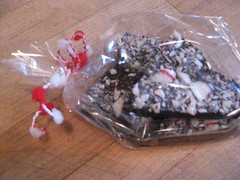
Seattle’s got snow! So at the Food Studios we decided to use our extra time and make up some tasty Dark Chocolate Peppermint Bark. This recipe is reminiscent of Frangos texture and is fun and easy to make at home. It is also great to make up for tasty gifts. The perfect thing to stay in and make this weekend.

Dark Chocolate Peppermint Bark 

Makes 24 nice-sized pieces of candy


15 pieces round, red-striped peppermint hard candies

12 ounces bittersweet chocolate

4 tablespoons (1/2 stick) butter

1/2 teaspoon salt

1/2 teaspoon peppermint extract

1/2 cup powdered sugar


Unwrap the candies and place in a large plastic bag. Press out any air and close the bag. Place it on a sturdy surface and then cover with a towel. With a meat mallet or heavy pan, smack the candy until crushed into 1/4- to 1/8-inch pieces. (Good to get all your aggressions out!)


In a medium bowl, warm the chocolate, butter, salt, and extract together over a bain-marie (pan of barely simmering water), whisking until the chocolate is just melted. Remove from the heat, sift in the powdered sugar, then stir to combine well.


Line a 8″ square baking pan with foil – shiny side up and make is very smooth.


Spread the mixture into the baking pan. Sprinkle evenly with the crushed candies and press into the chocolate. Refrigerate for at least 2 hours before serving.


To remove the candy from the pan, pull up on the foil to remove from pan. Peel foil off.  Cut the candy into about 24 pieces.  ©2008 by Kathy Casey Food Studios®

Posted by Kathy on December 19th, 2008  |  Comments Off on Snowy Weekend … Make Some Festive Dark Chocolate Peppermint Bark |  Posted in dessert, Dishing with Kathy Casey Blog, Lifestyle, My Seattle, other

Fresh Spring Morel Mushrooms – Tips and Recipes as heard on KOMO Radio

The morel is a spring delight and one of the richest tasting mushrooms. Just a little will do you in a recipe for their flavor is intense. One year while pulling out of the driveway, I almost leapt from the car as I spied a big fat morel popping out of the neighbor’s new grass. Morels fruit in dirt and are saprophytic (meaning they eat dead plant material), so they can often be found growing out of soil that has been disturbed, such as a new lawn, new garden beds or forest burns. If you’re lucky, you may even find them growing around campfire pits.

If you’d like to try your luck at picking wild morels, ask an experienced mushroom-hunting friend to take you (be cautioned, they may want to blindfold you before the road trip to their secret picking spot!), or join your local mycological society for a spring field trip.

Or if that’s not your style, try a trip to your well-stocked produce department or farmers’ market. Be sure to look for fresh morels (not too wet) without any little friends hiding in the caverns of their brain-like caps, that are not wet and wiggly. The first morels to appear in the markets are Verpa bohemica, which are often referred to as early morels but are really not morels at all and are definitely in my opinion not as tasty. Look for true morels; their caps are attached all along the stem. Verpas are like a thimble sitting on a chopstick.

Always cook any fresh morels; raw morels sometimes cause an upset stomach.

EARLY SPRING – Morel Mushroom Madness overtakes local fungi enthusiasts and fungi hunters scope their secret spots, looking for the first signs of this delicacy. Morels fruit usually around the mid/end of April in the Northwest lowlands, depending on the weather, and peak the last two weeks of May on the east side of the Cascades. The season can shift depending upon weather.

LEARNING TO HUNT – Before I go any further, however, I must warn you that, if you are not an experienced picker, then you need to join a mushroom interest group or find an experienced picker to go with. I suggest you join one of the local mycological societies. Membership pluses are:
* Field trips to fruiting areas
* Members are very generous about teaching the habitat and getting people started; as you learn the habitat, then you can find your own secret spots.
* Members will also get you on the right track for the do’s and don’ts of mushrooming

Puget Sound Mycological Society: Telephone (206) 522-6031 www.psms.org
Their Web site also has links to mushroom interest groups on the Kitsap Peninsula, in Snohomish County, South Sound, Spokane and the Palouse, as well as in Oregon, British Columbia, and Idaho.

MOREL HABITAT- in the Northwest morels can be found anywhere. They grow near trees in conifer forests, open grasslands, bare dirt area and even out of needle duff. If it is a dry season, look in gullies and other areas of water runoff and under logs. But MOST of the dense fruiting morels I have ever seen are in large clear-cut areas or burn outs.

THE TWO MOST TYPICAL HABITATS AREWhere they are naturalized — usually a grassy area where natural composting occurs or along a water run off or stream where leaves drop to give them food. Where they are naturalized, they fruit every year. Disturbed ground – such as logged or burned areas, here morels will come up only once because they have no continuous food source

PICKING PROTOCOL – Good mushrooming protocol is cutting your mushrooms with a knife at ground level rather than pulling them up. This way you are not disturbing the mushroom-producing organism, called the mycelium. (A mushroom is to the mycelium as an apple is to the tree.) By cutting your mushrooms you are also doing it the clean way–leaving the dirt and sandy bottoms in the ground. Also bear in mind that mushrooms need to release spores to keep the species alive, so leave a couple in the ground. Place your prizes reverently in a basket or bucket, never a plastic bag! They sweat and suffocate in plastic since they are 90-95% water.

DO NOT EAT MORELS RAW – It’s always best to cook morels (or any type of mushroom) thoroughly because:
*it enhances their flavor
*drives off some harmful substances (hydrazines) found in edible mushrooms
*destroys bacteria which may be present on raw mushrooms
However, cooking does NOT make POISONOUS mushrooms edible

TRAILHEAD SNACK – Take along a big ol’ cast iron skillet, wine, a baguette, a camp stove and a few sautéing goodies like a little olive oil or butter, some garlic, a few fresh herbs—such as chives, lemon thyme, and, yes, for this occasion—cream. (You will probably have already burned off the calories!). Morels marry with cream like no tomorrow. Sauté morels till tender and soft, then reduce with a little the cream till thick and luscious. Top thin, crusty slices of hearty bread and you’ll have the outdoor “snack” of your life.

COOKING MORELS AT HOME – Sautéed morels are great in herbed scrambled eggs. If you really hit the jackpot then save the big ones to stuff and bake — such as with seasoned crabmeat. Morels also make a divine sauce — sauté them with herbs and then reduce with cream – and spoon the sauce over grilled steak or halibut. Yum!

PASTA WITH FRESH MORELS, SPRING PEAS & MINT
This recipe calls for 1/4 cup thin sliced morels – but if you find more by all means use more! Also you can substitute pancetta for the bacon – if you like more delicious bacon flavor you can always double the amount.

Yields: 2 servings as an entree or 4 as an accompaniment

2 cups cooked orecchini (“little ears”) pasta (1/4 lb dry), or substitute bow-tie pasta
1/2 teaspoon olive oil
——————————————————-
1 thick slice bacon, diced 1/4 inch
1/2 small shallot, minced
1/3 – 1/2 cup thinly sliced fresh morel mushrooms, or substitute 1/4 oz wt. dried (about 6 medium mushrooms), covered with cool

water and soaked about 40 minutes or until soft and rehydrated; strain juice to use in soups or pasta dishes
10 snap peas, optional
2 teaspoons fresh lemon juice
2 tablespoons white wine
1/4 cup chicken broth
1/4 cup heavy cream
1/4 teaspoon salt, or to taste
1/4 cup fresh shelled peas, quickly blanched
2 tablespoons high quality, grated Parmesan cheese
1 1/2 – 2 teaspoons chopped fresh mint leaves
freshly ground black pepper to taste
*pea vines for garnish, optional

To cook pasta: Stir pasta into a large pot of rapidly boiling, lightly salted water. Cook as per package directions, or until al dente. Drain pasta well then toss in a bowl with 1/2 teaspoon olive oil. Cover with plastic wrap to keep warm and set aside. (Do not rinse pasta with water; the olive oil will keep it from sticking together.)

Over medium-high heat, sauté bacon until about half done [about 2 minutes] then add shallots, mushrooms and sugar snap peas. Sauté for 2 minutes or until mushrooms are just soft, then deglaze pan with lemon juice and wine. Add chicken broth and cream, then immediately fold in reserved pasta and peas. Season with salt. Reduce until the sauce is just becoming thickened and just coating the pasta — about 5 – 10 minutes. Fold in cheese and mint. Divide between warm bowls and garnish with pea vines. Pass extra Parmesan if desired.

Vegetarian: Substitute 2-3 teaspoons olive oil for the bacon and use vegetable or mushroom broth to replace chicken broth.

Note: *Pick tender young vines from your pea patch or look for them in Asian markets or well-stocked produce markets. [Do not use vines from ornamental sweet peas.]
Copyright © 2008 by Kathy Casey

Morels in Cream Sauce
This recipe is from my friend Patrice Benson, an avid mushroom hunter and great cook. She says “if you are new to morels, this is a good recipe to acquaint you with their true taste”. I also like to add a little snipped chives and/or a pinch of lemon thyme and sometimes a splash of dry sherry to her recipe.

Serves 4

2 tablespoons oil or butter
1/2 lb. fresh morels, cleaned and sliced
1 chopped shallot
1 cup dry white wine
1 cup whipping cream
2 tablespoons butter (optional)
salt & pepper to taste

Heat skillet on medium-high to high, add oil, then mushrooms and shallot. Saute for 1 minute, then add the wine. Continue

cooking over high heat until the wine is reduced by half. Then add the cream and reduce by half. Reduce the heat to low, add the

butter, salt and pepper if desired.

Serve as an appetizer with fresh, crusty bread for dipping, or serve atop sautéed or grilled chicken breast or halibut.
Recipe by Patrice Benson.

Posted by Kathy on May 1st, 2008  |  Comments Off on Fresh Spring Morel Mushrooms – Tips and Recipes as heard on KOMO Radio |  Posted in appetizers, Dishing with Kathy Casey Blog, KOMO Radio, other, Pasta-Risotto, Recent Posts, Recipes, sides

Upside Down Cake – Eat it for breakfast!

Upside-down cakes are a major comfort food. They have been a mainstay over the years at church suppers and family picnics. When I was a kid, my mom’s Pineapple Upside-Down Cake was one of my favorites, partly because it was so mysterious and amazing to see it being put together with the pineapple in the bottom of the baking dish and then have the wonderfully gooey, caramelized pineapple slices end up on the top. Magical!

But hey, upside down cakes are not just for dessert. For a tasty wake-up variation I whipped up a Breakfast Oatmeal Apple Upside-Down Cake. This moist cake is not too sweet and is a real treat for a weekend brunch. My tasting team especially liked it topped with a pouf of yogurt.

Breakfast Oatmeal Apple Upside-Down Cake
Makes one 10-inch round cake, serving 8 to 10

Batter:
2/3 cup rolled oats
½ cup golden raisins
¾ teaspoon ground cinnamon
¼ teaspoon ground nutmeg
1 cup boiling water
2/3 cup packed brown sugar
2/3 cup granulated sugar
1 egg
1/3 cup vegetable oil
1 cup flour
¾ teaspoon baking soda
¼ teaspoon salt

Apple layer:
1 tablespoon brown sugar
1 tablespoon flour
½ cup chopped pecans
1 Gala apple, cored, skin on, sliced in thin wedges
Vanilla yogurt (optional)

Preheat oven to 350 degrees. Spray a 10-inch round cake pan with vegetable cooking spray and set aside.

To prepare batter: Mix oats, raisins, cinnamon and nutmeg in a heat-proof container and pour measured boiling water over mixture. Let sit for 15 minutes.

Meanwhile, prepare the apple layer: In a small bowl, mix together 1 tablespoon brown sugar, 1 tablespoon flour and the pecans; pat out into the bottom of the cake pan. Then lay the apple slices out evenly on the brown sugar mixture. Set aside.

To finish batter: In a large bowl, combine the 2/3 cup brown sugar, granulated sugar, egg and oil; mix well. In a small bowl, mix together 1 cup flour, soda and salt, then add to sugar mixture. Add plumped oat mixture and stir well.

Without disturbing the apple layer, add batter to the cake pan carefully, and then lightly rap pan on counter to release any bubbles. Bake in preheated oven for 35 to 40 minutes or until cake tests done.

Let sit 5 minutes after coming out of the oven, loosen sides of cake from pan with a table knife, and then immediately invert cake onto a large plate. Serve warm or at room temperature, topped with dollops of vanilla yogurt if desired.

Copywrite 2005 Kathy Casey Food Studios

Posted by Kathy on April 1st, 2008  |  Comments Off on Upside Down Cake – Eat it for breakfast! |  Posted in breakfast, dessert, Dishing with Kathy Casey Blog, other, Recent Posts, Recipes
Untitled